

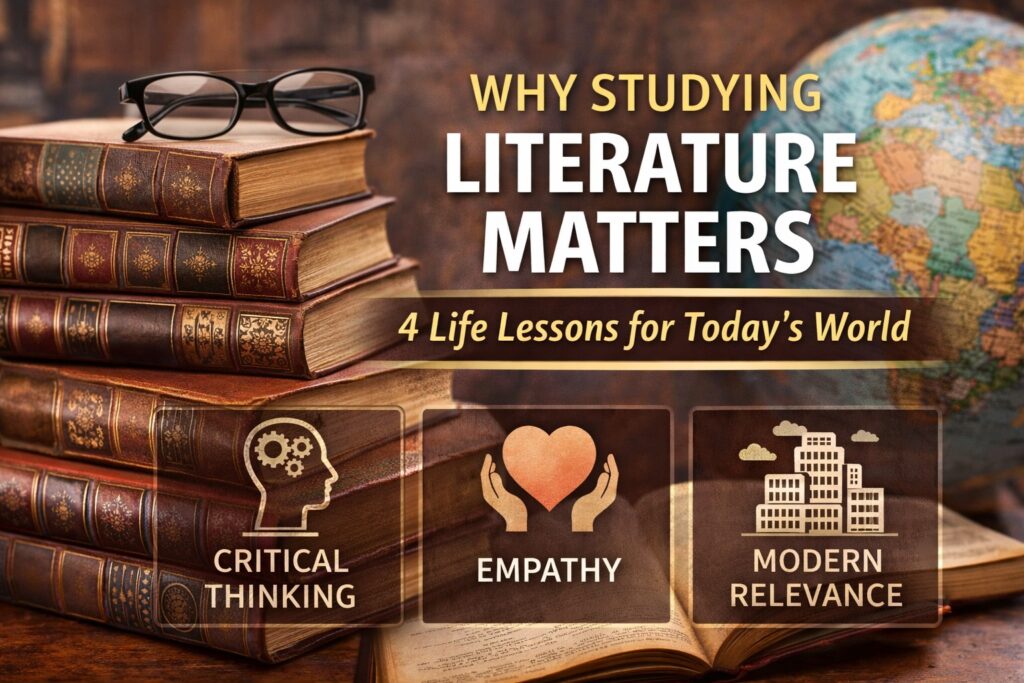
English literature is often seen as a subject focused on stories, poems, and old texts, but its real power goes far beyond reading and memorizing plots. In today’s fast-changing world, English literature plays a vital role in developing critical thinking, emotional intelligence, and cultural awareness, skills that are essential for academic success and real-life decision-making.
This article explores how English literature influences the way students think, feel, and understand the world, making it one of the most valuable subjects in modern education.
Understanding English Literature Beyond Textbooks
English literature is not just about reading novels or analyzing poems for exams. It is about engaging with ideas, emotions, moral conflicts, and human experiences. When students read literary texts, they are exposed to different perspectives, historical contexts, and emotional realities that textbooks alone cannot provide.
Through characters, narratives, and themes, literature encourages readers to ask deeper questions: Why do people behave the way they do? What is right or wrong? How do emotions influence decisions? These questions form the foundation of critical thinking.
How English Literature Develops Critical Thinking Skills
Encouraging Analysis and Interpretation
One of the most important benefits of studying English literature is the development of analytical skills. Literary texts rarely provide direct answers. Instead, they invite interpretation. Students must analyze characters, themes, symbols, and narrative techniques to understand the deeper meaning of a text.
For example, when reading a novel like Animal Farm by George Orwell, students are encouraged to look beyond the story of animals and analyze its political symbolism. This process trains the brain to think logically, evaluate evidence, and form independent opinions.
Teaching Students to Question Assumptions
Literature often challenges commonly accepted beliefs and social norms. Characters may act against expectations, and stories may end without clear moral conclusions. This uncertainty pushes students to question assumptions rather than accept ideas blindly.
By comparing different interpretations of the same text, students learn that multiple viewpoints can coexist. This skill is essential not only in academics but also in real-world problem-solving and decision-making.
Improving Argumentative and Writing Skills
Studying literature naturally improves students’ ability to construct logical arguments. Essays, reviews, and critical analyses require students to support their ideas with evidence from the text. Over time, this practice enhances clarity of thought, coherence, and persuasive writing skills.
These abilities are highly valued in higher education and professional environments, where clear communication and reasoned arguments are crucial.
The Role of English Literature in Building Emotional Intelligence

Understanding Human Emotions Through Characters
Emotional intelligence involves recognizing, understanding, and managing emotions, both our own and those of others. Literature provides a safe space for students to explore complex emotions through fictional characters.
When readers experience a character’s struggles, fears, or hopes, they develop empathy. Whether it is the inner conflict of Shakespeare’s Hamlet or the emotional growth of Elizabeth Bennet in Pride and Prejudice, literature allows students to connect deeply with human emotions.
Developing Empathy and Compassion
By stepping into the lives of characters from different backgrounds, cultures, and time periods, students learn to see the world from perspectives other than their own. This exposure fosters empathy and compassion, helping students become more understanding and emotionally aware individuals.
In a diverse and interconnected world, this emotional awareness is a critical life skill.
Emotional Reflection and Self-Awareness
Literature often mirrors real-life situations, allowing students to reflect on their own experiences. Themes such as love, loss, ambition, identity, and failure resonate deeply with readers.
Through reflection, students gain better self-awareness, learning to understand their emotions and reactions. This process contributes to personal growth and emotional maturity.
English Literature and Cultural Awareness

Exploring Different Cultures and Histories
English literature introduces students to cultures, traditions, and historical events from around the world. From the colonial context in Things Fall Apart to the social class system in Victorian novels, literature provides insight into how societies evolve and how history shapes human behavior.
This cultural exposure broadens students’ understanding of global issues and encourages respect for diversity.
Connecting Literature to Modern Society
Many themes in classic and modern literature remain relevant today. Issues such as power, inequality, identity, and freedom continue to shape contemporary society.
By drawing connections between literary themes and current events, students learn to apply literary insights to real-world contexts, strengthening both critical thinking and social awareness.
Why English Literature Still Matters in the Digital Age
In an era dominated by technology and short-form content, some may question the relevance of literature. However, English literature is more important than ever.
Reading long-form texts improves concentration, deep thinking, and patience, skills often weakened by constant digital distractions. Literature encourages readers to slow down, reflect, and engage deeply with content, promoting mental discipline and intellectual growth.
English Literature as a Foundation for Academic and Career Success

The skills developed through studying English literature extend far beyond the classroom. Critical thinking, emotional intelligence, effective communication, and cultural awareness are essential in fields such as education, law, journalism, psychology, business, and public service.
Employers increasingly value individuals who can analyze complex information, understand human behavior, and communicate clearly, qualities nurtured through literary studies.
Practical Tips for Students Studying English Literature
- Read actively by asking questions while reading
- Take notes on themes, characters, and symbols
- Discuss texts with others to explore different perspectives
- Connect literary themes to real-life experiences
- Practice writing analytical responses regularly
Final Thoughts
English literature is far more than an academic subject; it is a powerful tool for intellectual and emotional development. By engaging with literary texts, students sharpen their critical thinking, deepen their emotional intelligence, and gain a broader understanding of the world.
In a society that values quick information and instant opinions, English literature teaches us to think deeply, feel empathetically, and communicate thoughtfully. Its impact on students is long-lasting, making it an essential part of education in any era.
If you found this article helpful, explore more insightful English literature content on Study2Inspire and continue your journey of thoughtful learning.
Engagement Pack: English Literature & The Mind
Critical Thinking Discussion Questions
- The Gray Area: Can you think of a literary character who wasn’t clearly “good” or “evil”? How did navigating their “gray area” change how you judge people in real life?
- The Digital Shift: In an age of 15-second videos, does reading a 300-page novel provide a type of “mental workout” that social media can’t? Why or why not?
- Challenging the Author: If you could rewrite the ending of a classic book to better reflect modern values, which one would it be and why?
Emotional Intelligence (EQ) Reflection
- Empathy Test: Name a book that made you feel deep sympathy for someone completely different from you (different culture, era, or belief). What specific moment triggered that feeling?
- Self-Mirroring: Which literary character’s internal struggle most closely mirrors a challenge you have faced in your own life?
- Conflict Resolution: How has analyzing the “moral failures” of characters in literature helped you handle your own mistakes or conflicts?
Essay Prompts for Students
Prompt 1: The STEM-Lite Argument “In a world increasingly focused on STEM (Science, Technology, Engineering, and Math), argue why English Literature is a necessary ‘soft-skill’ foundation for future engineers and scientists.”
Prompt 2: The Empathy Engine “Literary critic Harold Bloom once said that we read to ‘mend our solitudes.’ Discuss how the act of reading fiction serves as a tool for increasing global empathy and reducing social prejudice.”
Prompt 3: Literature vs. Information “Analyze the difference between ‘acquiring information’ (via the internet) and ‘gaining wisdom’ (via literature). Use specific examples from texts you have studied to support your argument.”
Author’s Note
At Study2Inspire, we believe that education is more than just passing exams. It’s about opening doors to new ways of thinking. Whether we are exploring the vastness of the cosmos, the precision of a new AI tool, or the emotional depth of a classic novel, our mission is to provide you with the insights you need to grow both academically and personally. We don’t just study to learn; we study 2 inspire a better version of ourselves and the world around us.
Frequently Asked Questions (FAQs)
Q1: Why is English literature important for students?
A: English literature helps students develop critical thinking, emotional intelligence, and communication skills. By reading literary texts, students learn to analyze ideas, understand human emotions, and express their thoughts clearly, which benefits both academic and personal growth.
Q2: How does English literature improve critical thinking?
A: Literary texts encourage students to interpret meaning, analyze characters, and evaluate themes rather than memorizing facts. This process trains students to question assumptions, form independent opinions, and support arguments with evidence.
Q3: Can studying English literature help in real life?
A: Yes, the skills gained from studying English literature, such as empathy, problem-solving, and effective communication, are useful in real-world situations, including workplaces, social interactions, and leadership roles.
Q4: How does English literature develop emotional intelligence?
A: Literature exposes readers to diverse emotions, experiences, and perspectives through characters and stories. This helps students understand their own feelings and develop empathy toward others, which in turn strengthens emotional awareness and maturity.
Q5: Is English literature still relevant in the digital age?
A: Absolutely. In a world dominated by short digital content, English literature promotes deep thinking, focus, and reflection. These skills are increasingly valuable in modern education and professional life.
Q6: What careers benefit from studying English literature?
A: Careers in teaching, journalism, law, psychology, writing, media, public service, and business benefit greatly from the analytical and communication skills developed through literature studies.
Q7: How can students study English literature more effectively?
A: Students can improve their understanding of literature by reading actively, taking notes on themes and characters, discussing texts with others, and practicing analytical writing regularly.
Q8: Does English literature help improve language skills?
A: Yes. Reading literature improves vocabulary, sentence structure, comprehension, and writing style, making students more confident and fluent in English.