There are moments in history that quietly divide time into two parts. Life before, and life after. The invention of the printing press, the industrial revolution, and the arrival of the internet. Each one reshaped how humans lived, learned, and worked. Artificial Intelligence is not just another technological upgrade. It is one of those defining moments.
We are living inside a transformation that is happening faster than most people realize. AI is already writing, designing, diagnosing, predicting, recommending, and assisting. It is present in classrooms, offices, hospitals, phones, homes, and even creative spaces once believed to be uniquely human.
Yet the real question is not whether AI will change the world. It already has.
The real question is whether we are prepared to change with it.
This post is not meant to frighten you. It is meant to awaken you.
Explore more insights on modern learning techniques in our English Literature and Science & Technology categories.
Understanding Artificial Intelligence Beyond the Buzz

Artificial Intelligence is often misunderstood. For some, it feels like magic. For others, it feels like a threat. In reality, AI is neither a miracle nor a monster. It is a tool created by humans to perform tasks that require intelligence, pattern recognition, and decision-making.
AI learns from data. It identifies patterns faster than humans can. It can process enormous amounts of information in seconds. But it does not think like a human. It does not feel purpose, curiosity, or moral responsibility. It only reflects the data and instructions we give it.
This distinction is crucial. AI does not replace human meaning. It amplifies human direction.
Those who guide it wisely will benefit. Those who ignore it may struggle.
Boost your personal and career growth with inspirational posts in our Motivation section.
Education Is Being Redefined
For centuries, education followed a familiar model. Teachers delivered information. Students memorized it. Exams measured recall. Degrees acted as proof of knowledge. That model is now under pressure.
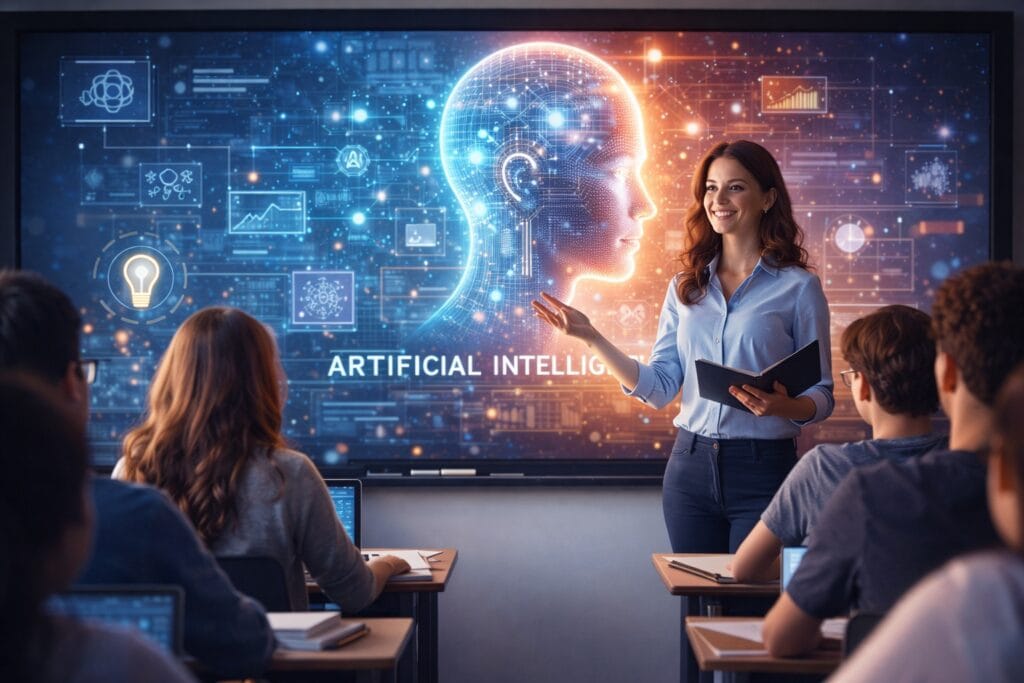
Today, information is everywhere. AI can explain complex topics in seconds. It can translate languages instantly. It can tutor students at any hour of the day. The value of education is no longer about access to information. It is about understanding, critical thinking, creativity, and application.
This shift demands a new mindset.
Students must stop asking, What should I memorize?
They must start asking, How should I think?
Teachers are no longer just instructors. They are guides, mentors, and facilitators of deeper learning. Education systems that fail to adapt will produce graduates who are unprepared for reality.
Learning itself is becoming lifelong. Degrees will matter less than skills. Curiosity will matter more than certificates.
Careers in the Age of AI
The fear that AI will take jobs is understandable. History shows that every major technological shift disrupts employment. Some roles disappear. New ones emerge.
AI will automate repetitive and predictable tasks. Jobs based solely on routine processes are at risk. But roles requiring judgment, empathy, creativity, strategy, and ethical decision-making will grow in importance.
The safest career path is no longer a specific profession. It is adaptability.
The future belongs to people who can learn quickly, unlearn outdated methods, and relearn continuously. It belongs to those who can work alongside AI rather than compete with it.
The question is no longer What job will I do for life?
It is What value can I offer that machines cannot fully replicate?
Skills That Will Matter More Than Ever
In an AI-driven world, technical skills matter, but human skills matter more.
Critical thinking will separate thinkers from followers. Creativity will distinguish creators from copy-pasters. Communication will remain essential in a world filled with automated messages. Emotional intelligence will define leadership when machines handle logic.
Ethics will become a core skill. As AI influences decisions in education, healthcare, law, and governance, humans must ensure fairness, accountability, and responsibility.
Learning how to learn may be the most powerful skill of all.
Those who master this will never be outdated.
The Myth of Instant Success
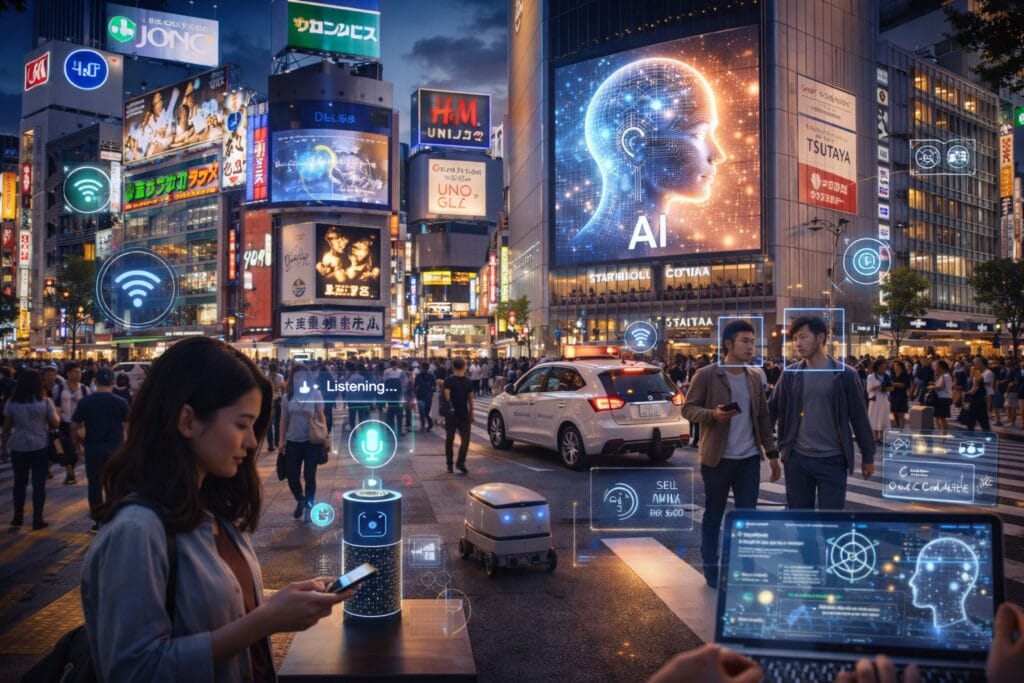
AI has made many tasks easier, but it has not removed the need for effort. There is a growing illusion that technology guarantees instant success. This belief is dangerous.
AI can assist, but it cannot replace discipline. It can generate ideas, but it cannot build character. It can speed up processes, but it cannot define purpose.
People who rely blindly on AI without understanding will produce shallow outcomes. People who use AI thoughtfully will multiply their potential.
Technology rewards intention, not laziness.
Human Purpose in a Machine World
One of the deepest concerns surrounding AI is not about jobs or education; it is about the potential for harm. It is about meaning.
If machines can write, compose music, create art, and analyze data, what remains uniquely human?
The answer is not found in tasks. It is found in intention.
Humans seek meaning. Humans care about stories, values, justice, hope, and belonging. AI can imitate patterns, but it does not experience life.
Our role is shifting from doing everything to deciding what matters.
In this sense, AI challenges us to be more human, not less.
Inequality and Responsibility
AI has the power to reduce inequality, but only if access is fair. If advanced tools remain available only to a few, the gap between the privileged and the marginalized will grow wider.
Education systems, governments, and institutions carry a responsibility. Digital literacy should not be optional. Ethical frameworks must be built alongside innovation.
The future should not belong only to those who code. It should belong to those who think critically about how technology shapes society.
Awareness is the first step toward responsibility.
The Role of Youth and Students
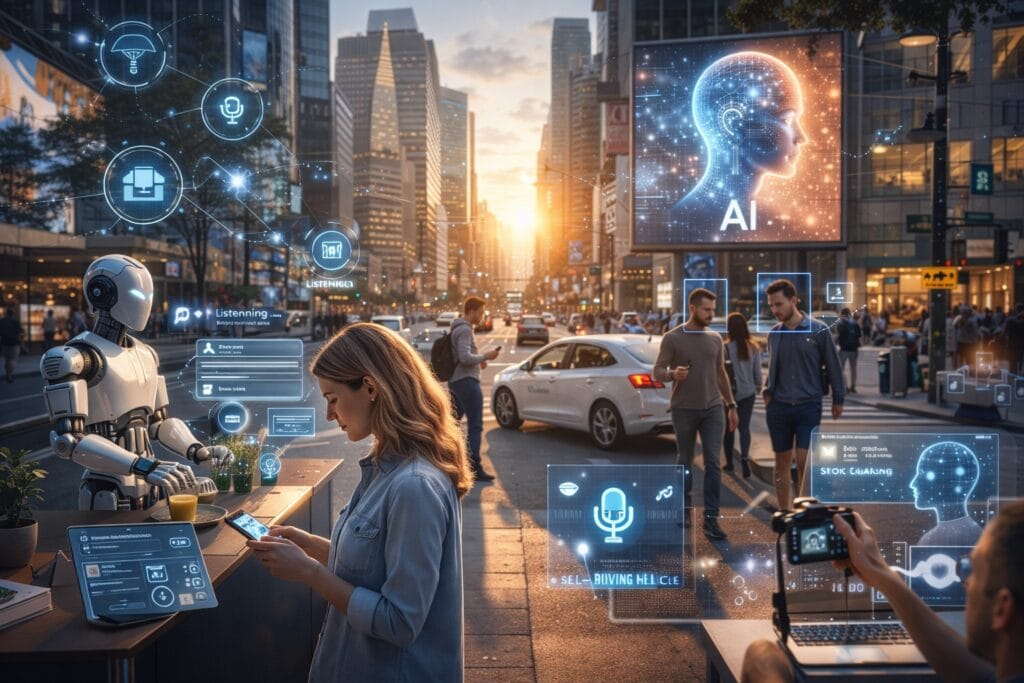
Young people stand at the center of this transformation. They are not just users of AI. They are future builders, leaders, and decision-makers.
This is not a generation that must wait for change. It is a generation that must shape it.
Students should not fear AI. They should question it. They should explore it. They should understand its limits and possibilities.
The goal is not to become dependent on tools. The goal is to become empowered by knowledge.
Enhance your knowledge through our Book Buddy section, where curated learning meets inspiration.
Inspiration Over Intimidation
Fear has always accompanied progress. When electricity spread, people feared it. When computers arrived, people resisted them. Today, AI carries similar anxieties.
But fear alone never builds a future.
Inspiration does.
When people understand that they are not being replaced, but repositioned, confidence grows. When learning becomes a choice rather than a burden, curiosity returns.
AI is not here to erase humanity. It is here to test our readiness.
What This Moment Demands From Us
This moment demands awareness. Ignorance is no longer harmless.
It demands humility. No one knows everything in a rapidly changing world.
It demands courage. Adapting requires effort and discomfort.
It demands responsibility. Technology without ethics is dangerous.
Most of all, it demands purpose.
We must decide how we want to use the tools we have created.
The Road Ahead
The future will not ask whether we like AI. It will ask whether we prepared for it.
Those who learn will lead. Those who adapt will thrive. Those who resist blindly will struggle.
Study2Inspire exists to encourage learning, reflection, and growth. This moment aligns with that mission more than ever.
Education is not ending. It is evolving.
Human value is not disappearing. It is being redefined.
Final Reflection
The age of Artificial Intelligence is not a distant future. It is now.
You do not need to become a machine. You need to become more aware, more thoughtful, more adaptable.
Learn not just to survive, but to contribute.
Adapt not just to follow, but to lead.
The world is changing.
The question is simple.
Will you change with it?
Frequently Asked Questions (FAQs)
Q1: What is the main message of this post?
A: The post highlights that Artificial Intelligence is not just a technological trend but a historic transformation. It encourages readers to learn, adapt, and grow with AI instead of fearing it, so they can thrive in education, careers, and life.
Q2: Is Artificial Intelligence a threat to humans?
A: AI is not a threat by itself. It is a tool created by humans. The real challenge lies in how we use it. When guided responsibly, AI amplifies human potential. When ignored or misused, it can widen gaps in skills and opportunities.
Q3: How is AI changing education?
A: AI is redefining learning by:
- Making knowledge instantly accessible
- Providing personalized tutoring
- Supporting lifelong learning
- Shifting focus from memorization to critical thinking and creativity
Education today is less about storing information and more about learning how to think.
Q4: Will AI take away jobs in the future?
A: AI will replace some routine and repetitive jobs, but it will also create new roles. Careers that rely on judgment, creativity, empathy, leadership, and ethics will become more valuable. The safest skill in the future is adaptability.
Q5: What skills matter most in the age of AI?
A: The most important skills include:
- Critical thinking
- Creativity
- Communication
- Emotional intelligence
- Ethical reasoning
- The ability to learn continuously
These are skills machines cannot fully replicate.
Q6: Should students fear Artificial Intelligence?
A: No. Students should not fear AI; they should understand and question it. Learning how AI works empowers young people to use it wisely and shape the future instead of being controlled by it.
Q7: Can AI replace human creativity and purpose?
A: AI can generate content, but it cannot create meaning, values, or purpose. Humans bring intention, emotion, and moral responsibility. AI supports creativity; it does not replace humanity.
Q8: How can individuals prepare for an AI-driven future?
A: Preparation begins with:
- Staying curious
- Learning new skills regularly
- Being open to change
- Using AI as a partner, not a shortcut
- Developing strong ethical awareness
Those who keep learning will always stay relevant.
Q9: Does AI increase inequality in society?
A: AI can either reduce or increase inequality. If access is limited, gaps will grow. If digital literacy and tools are shared widely, AI can become a force for inclusion and empowerment. Responsibility lies with educators, governments, and institutions.
Q10: What does this age of AI demand from us?
A: It demands:
- Awareness instead of ignorance
- Courage instead of fear
- Responsibility instead of misuse
- Purpose instead of passivity
AI challenges humanity to become more thoughtful, not less.