
Literature is more than just words on a page; it is a complex architecture of meaning, emotion, and subtext. Whether you are a student preparing for an exam or a bibliophile looking to deepen your reading experience, understanding literary devices is the “skeleton key” that unlocks the true intent of any author.
In this comprehensive guide, we will explore the most essential literary devices, provide real-world examples from classic and modern texts, and show you exactly how to identify them in your favorite books.
1. Why Literary Devices Matter for Readers and Writers
Before we dive into the list, we must understand the function of these tools. Authors use literary devices to transform ordinary language into extraordinary art.
Literary devices serve three primary purposes:
- Emphasis: Highlighting a specific theme or character trait.
- Imagery: Helping the reader “see” the world of the story without literal description.
- Connection: Linking the story to broader human experiences or historical contexts.
2. Figurative Language: The Color of Literature
At the heart of English Literature lies figurative language, words used in non-literal ways to create a stronger impact.
A. Metaphor vs. Simile
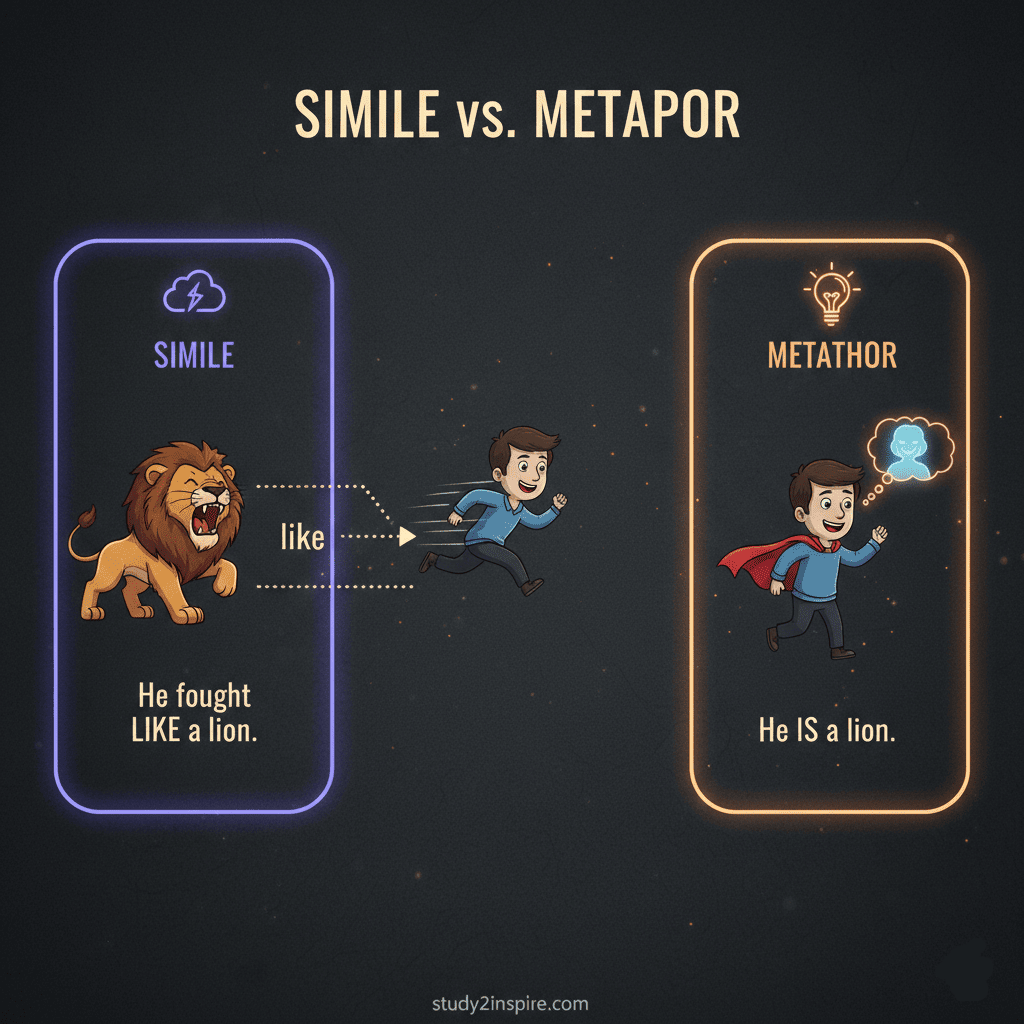
The most common confusion in English Grammar and Literature is the difference between these two.
- Simile: A comparison using “like” or “as.”
- Example: “He was as brave as a lion.”
- Metaphor: A direct comparison without “like” or “as.”
- Example: “The world is a stage” (William Shakespeare).
B. Personification
Personification gives human qualities to non-human objects. This device is a favorite of Romantic poets like William Wordsworth.
- Example: “The wind whispered through the trees.” (Wind cannot whisper; it creates a human-like atmosphere of secrecy).
3. The Power of Symbolism and Allegory
If figurative language is the “color,” then symbolism is the “soul” of a story.
Symbolism
A symbol is an object, person, or situation that represents something deeper.
- The Green Light in The Great Gatsby: It isn’t just a dock light; it represents Gatsby’s unattainable American Dream.
- The Mockingbird in To Kill a Mockingbird: It represents innocence and the sin of destroying it.
Allegory
An allegory is a story where the entire narrative is a symbol for a real-world political or moral situation.
- Example: George Orwell’s Animal Farm is an allegory for the Russian Revolution. Each animal represents a specific historical figure or social class.
4. Sound Devices: The Music of the Page
Literature isn’t just seen; it is heard. Authors use sound to influence the reader’s mood.
| Device | Definition | Example |
| Alliteration | Repetition of initial consonant sounds. | “Peter Piper picked a peck…” |
| Onomatopoeia | Words that sound like the noise they describe. | “Bang,” “Sizzle,” “Hiss.” |
| Assonance | Repetition of vowel sounds within words. | “The light of the fire is a sight.” |
| Consonance | Repetition of consonant sounds at the end of words. | “The lock stuck in the back.” |
5. Advanced Literary Techniques for High-Level Analysis
To truly stand out, we need to cover the techniques that professional critics use.
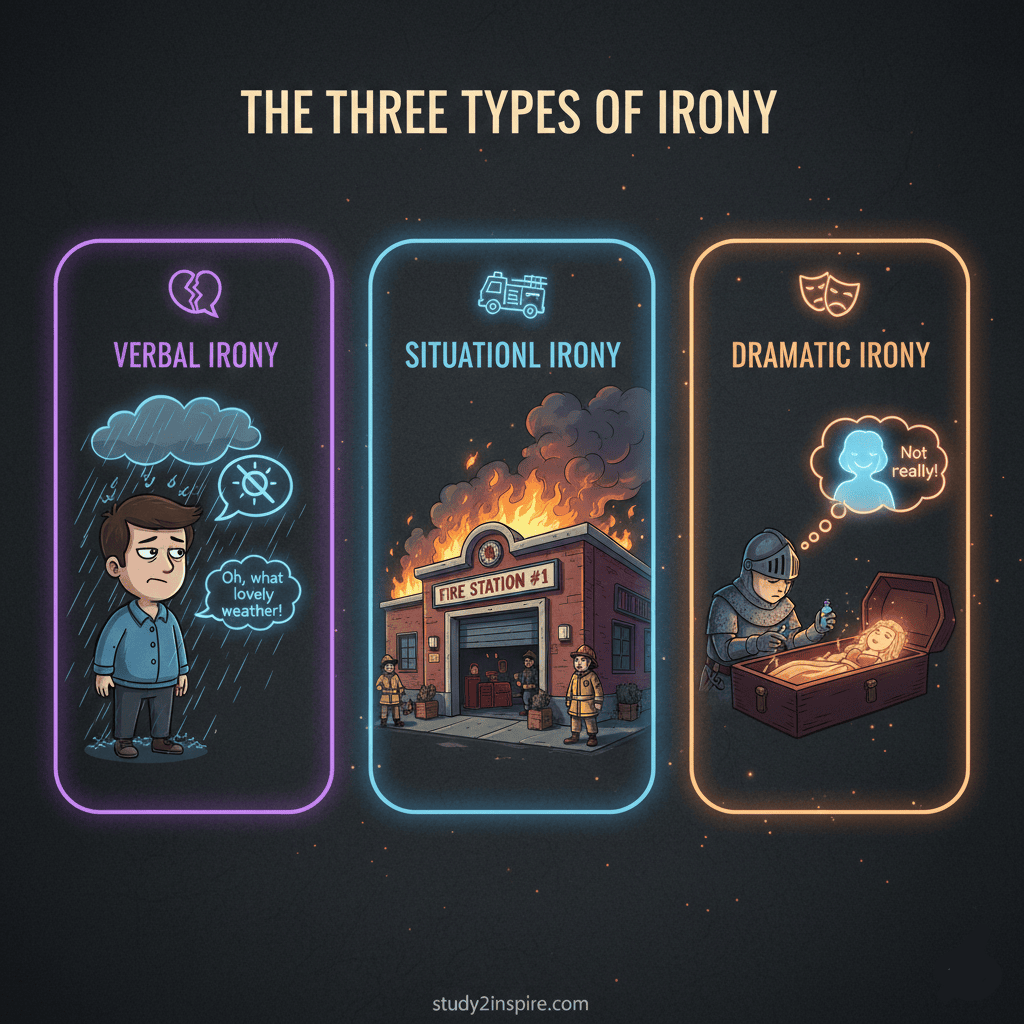
Irony (The Three Types)
Irony is essentially a gap between expectation and reality.
- Verbal Irony: Saying the opposite of what you mean (Sarcasm).
- Situational Irony: When the outcome is the opposite of what was intended (e.g., a fire station burning down).
- Dramatic Irony: When the reader knows something the characters do not (e.g., Romeo thinking Juliet is dead when she is actually sleeping).
Foreshadowing
This is a “breadcrumb” left by the author about what will happen later. It creates tension and “stickiness” in a story, making the reader unable to put the book down.
6. Structure and Plot Devices
How a story is built is just as important as the words used.
In Media Res
Starting a story “in the middle of things.” This is common in epic poetry like The Odyssey. It hooks the reader immediately by dropping them into the action rather than spending chapters on backstories.
Juxtaposition
Placing two contrasting things side-by-side to highlight their differences. Think of Charles Dickens’ famous opening: “It was the best of times, it was the worst of times.”
7. Deep Dive: Shakespeare and the Renaissance
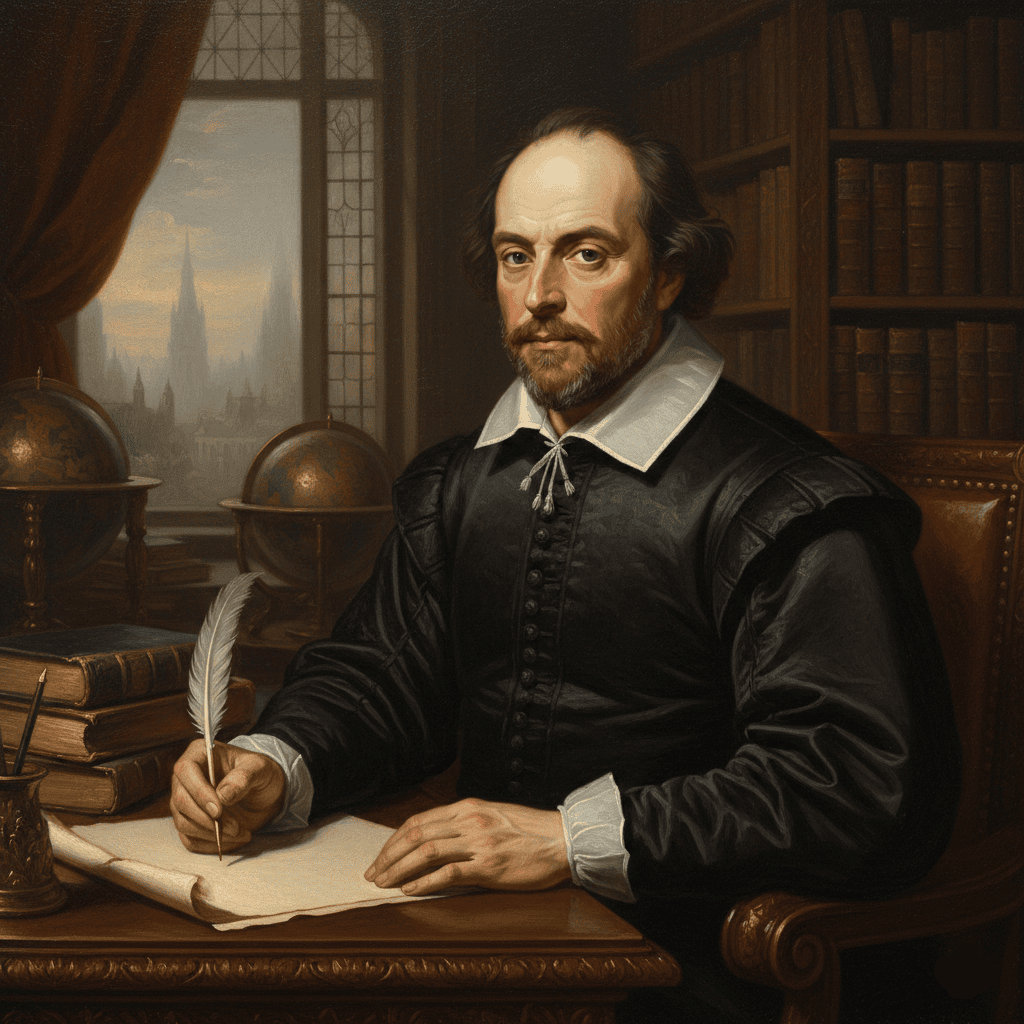
No English Literature guide is complete without William Shakespeare. He was a master of the Soliloquy—a device where a character speaks their inner thoughts aloud to the audience, alone on stage.
This device is crucial for character development. Without Hamlet’s “To be or not to be” soliloquy, we would never understand the depth of his existential crisis.
8. The Romantic Era: Imagery and Hyperbole
The Romantic poets (Keats, Shelley, Byron) relied heavily on Hyperbole (extreme exaggeration) and Imagery.
- Imagery involves using sensory language to create a “mental movie” for the reader.
- Example: “The crimson sun bled over the jagged horizon” uses both visual and tactile (implied pain) imagery.
9. Modernism and Stream of Consciousness
In the 20th century, authors like Virginia Woolf and James Joyce pioneered Stream of Consciousness. This device attempts to replicate the messy, non-linear way a human mind actually thinks. It breaks traditional grammar rules (which we cover in our English Grammar section!) to achieve psychological realism.
10. How to Conduct a Literary Analysis (Step-by-Step)
For your readers, providing a “How-To” section is vital for educational value.
- The First Pass: Read for the story. Enjoy the plot. Don’t look for devices yet.
- The Annotation: On the second read, underline things that seem repeated. Repetition is often a sign of a Motif.
- The “So What?” Factor: Once you find a metaphor, ask: Why did the author choose this? If a character is compared to a “broken clock,” it suggests they are stuck in the past or no longer useful to society.
- Contextualize: Look at the time period. A bird in a Victorian novel might represent domestic confinement, whereas a bird in a Modernist poem might represent freedom.
11. Common Pitfalls in Literature Studies
Many students fail because they “hunt for devices” without understanding the theme. Remember: A literary device is a means to an end, not the end itself. Do not just name the device; explain its effect on the reader.
12. Conclusion: Finding the Inspiration in Study
At Study 2 Inspire, we believe that English Literature is the study of the human heart. By mastering these devices, you aren’t just passing an exam; you are learning to read the world more deeply.
Literature teaches us empathy, critical thinking, and history. Whether you are analyzing a Shakespearean sonnet or a modern-day graphic novel, these devices remain the foundation of storytelling.
Frequently Asked Questions (FAQ)
1. What is the most common literary device? Metaphors and similes are the most common, as they allow authors to explain complex feelings through simple comparisons.
2. Is sarcasm a literary device? Yes, it is a form of Verbal Irony.
3. What is the difference between a Motif and a Theme? A Theme is the big idea (like “Love” or “War”). A Motif is a repeating image or symbol that helps explain the theme (like “red roses” appearing every time a character falls in love).